Evidence behind the service

Verified agentic discovery and design, grounded in open-access results.

Industrial applications, optimization workflows, numerical methods, and open infrastructure form one evidence chain for agent-enabled topology, shape, and parameter optimization in heat-transfer and multiphase-flow systems.

01
Industrial application evidence

Public research with industrial partners, grounded in experiments, CFD, software, and peer-reviewed records.

01

Active research program · Industry · research partnerships

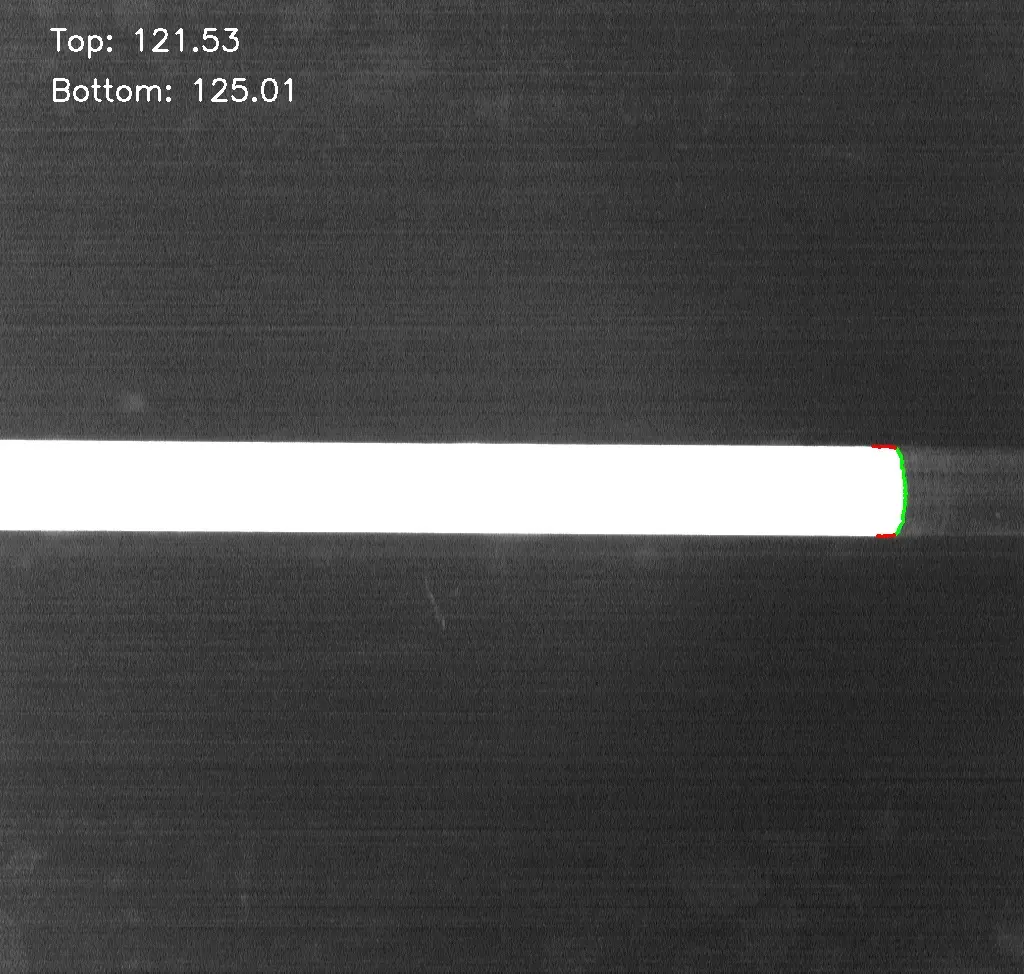
Industrial microfluidic digital twins

Problem
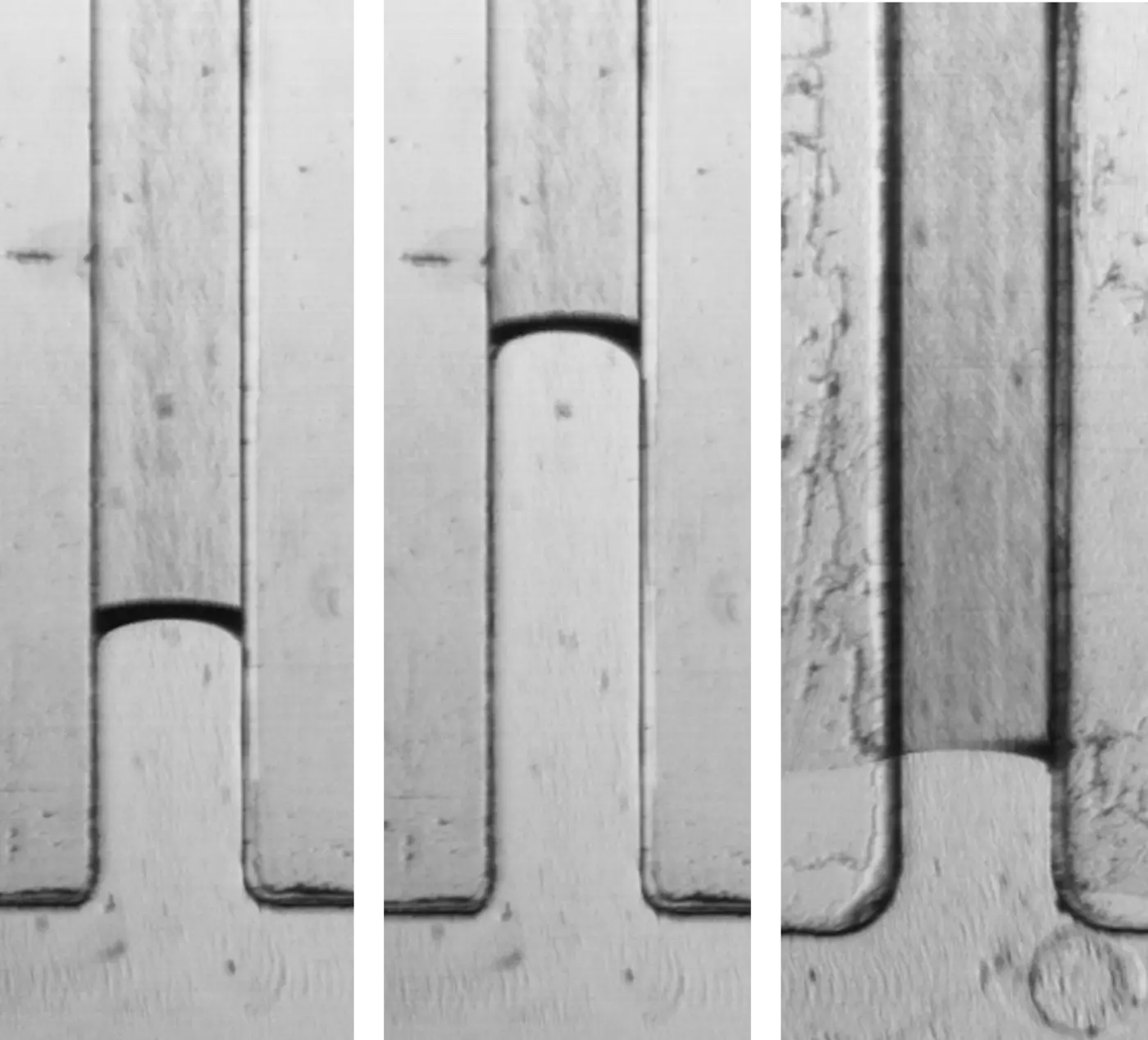
Reliable filling of industrial microstructures depends on coupled effects that cannot be reduced to one filling-regime map: contact-line motion, edge pinning, channel and cavity geometry, capillary forcing, and numerical parasitic currents.
Approach
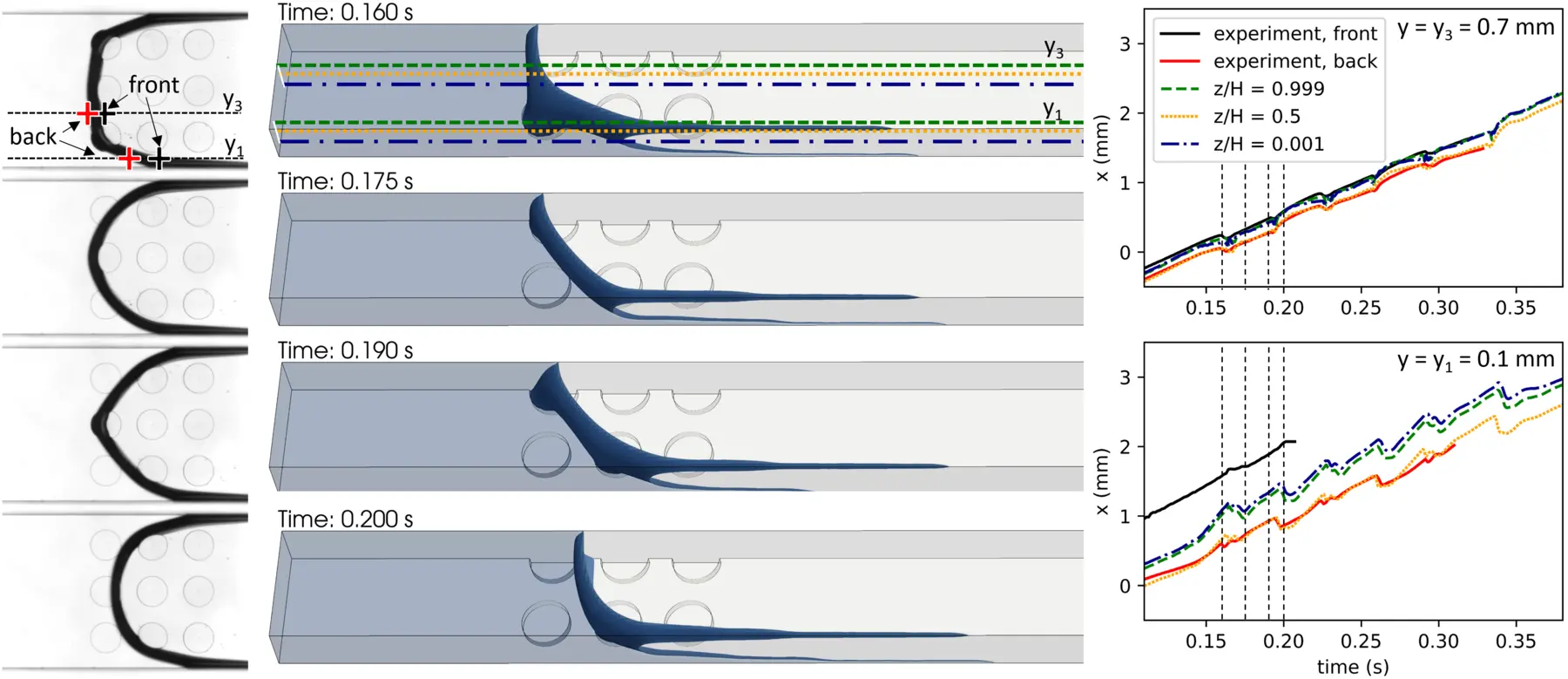
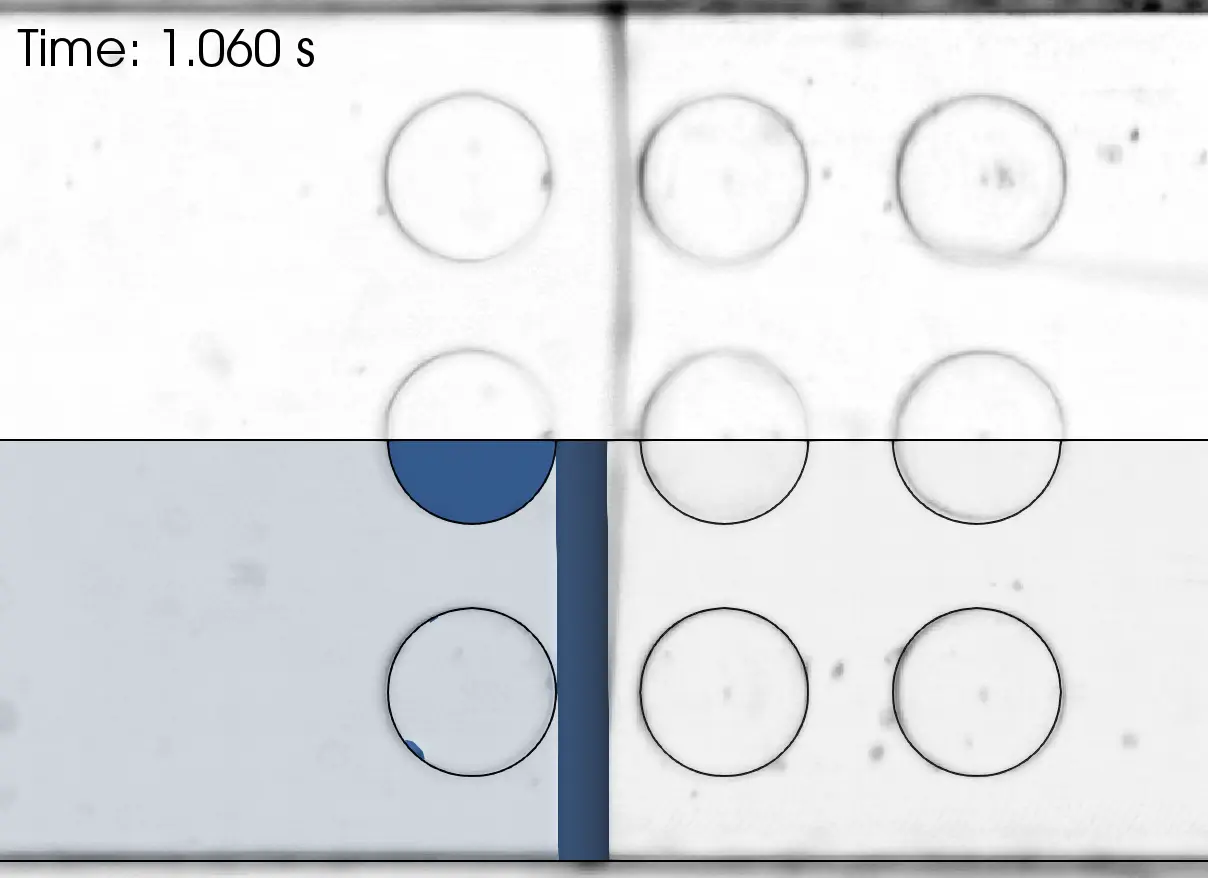
Connect controlled Bosch experiments, automated interface and contact-angle analysis, verified numerical stabilization, and three-dimensional geometric-VOF simulations in one traceable experiment-to-model evidence chain.
Evidence
Four peer-reviewed studies establish stable capillary-flow simulation, validated dynamic-wetting measurements, geometry-resolved pinning and penetration at T-junctions, and experiment-validated microcavity filling regimes.
My role
Principal Investigator and primary supervisor in the Bosch-funded doctoral research; numerical-method, simulation, software, and publication leadership.
Decision supported
Compare microchannel and cavity geometries and operating conditions against observed wetting, pinning, penetration, and gas-entrapment regimes.
Team receives
Validated image-analysis methods, reproducible CFD cases, numerical-stability guidance, and an evidence map linking observations to simulation assumptions.
Current maturity
Peer-reviewed industrial microfluidics evidence base spanning four connected studies; application-specific deployment is governed by a defined operating envelope and validation plan.
Geometric VOFHigh-speed microscopyAutomated image analysisDynamic wettingVerification

Public collaborations: Bosch. Names indicate publicly documented collaboration, not endorsement.
02
Optimization capability under development

Auditable evaluators and Bayesian search for expensive geometry and operating decisions.

02

Active method and workflow development · Heat transfer · multiphase flow · industrial design

Topology, shape, and parameter optimization for heat-transfer and multiphase-flow systems

Problem
A useful candidate must survive CAD feasibility, meshing, solver, convergence, and conservation checks before its thermal, hydraulic, mixing, or exposure objective can be trusted; brute-force search spends too much on weak candidates.
Approach
Build restartable CAD-to-OpenFOAM evaluators with immutable candidate records, mesh, convergence, and conservation gates, Gaussian-process surrogates, and uncertainty-aware acquisition. Current testbeds include CAD-driven Bayesian optimization (CADBO) of obstacle-field channels with non-uniform heating, passive micromixers, and robust urban-pollutant allocation across wind conditions.
Evidence
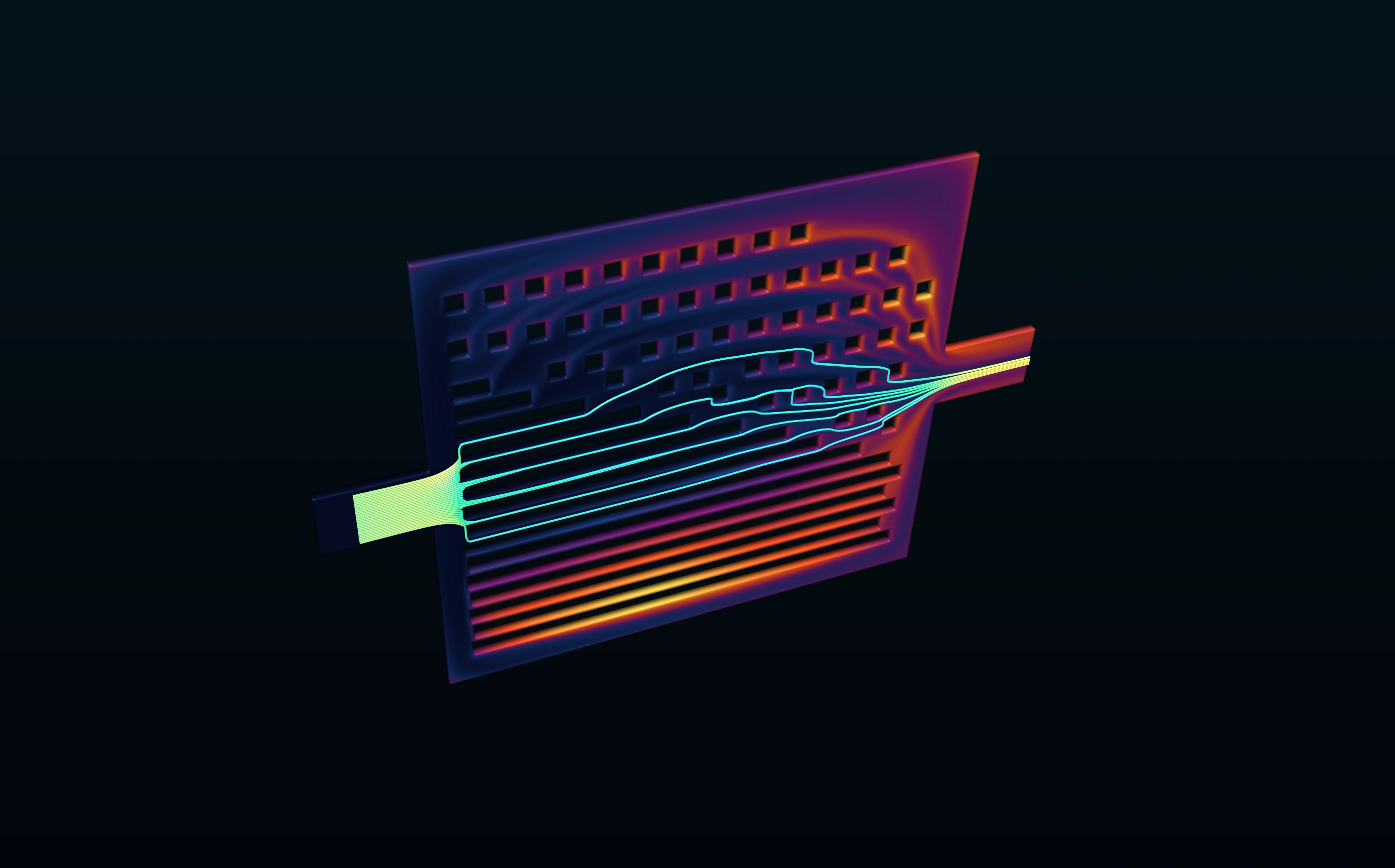
The convergence-accepted rect_weld_032 CHT evaluation resolves a 0.5 mm channel with a complex obstacle field at Re 443.6. At iteration 6000 it reports a mean heated-base temperature of 322.785 K, a maximum of 347.340 K, and a pressure drop of 1076.69 Pa; temperature, pressure, and velocity remain inspectable together.
My role
Principal workflow developer and supervisor of related CFD, surrogate-modelling, and optimization research.
Decision supported
Screen and prioritize geometries or operating conditions when each feasible, converged, conservative evaluation is expensive.
Team receives
Restartable evaluators, feasibility and V&V gates, surrogate and acquisition models, and an auditable candidate record.
Current maturity
Expert-led CAD-to-OpenFOAM evaluator demonstrated on a convergence-accepted CHT candidate; the next public milestone is a complete optimization campaign against a defined baseline.
Accepted evidence
CAD geometry and meshing completed, the mesh manifest was accepted, solver completion and convergence were recorded, the solution was reconstructed, and the retained fields and candidate record remain inspectable. This candidate establishes the evaluation record; baseline improvement and end-to-end optimization remain the next validation milestone.
Bayesian optimizationConjugate heat transferGaussian processesOpenFOAMBoTorchVerification
Three-dimensional CADBO conjugate-heat-transfer channel with temperature-coloured obstacle geometry and velocity streamlines.
293 K338.7 K

Convergence-accepted CADBO conjugate-heat-transfer design. Load the reduced dataset only when you want to explore it.

Temperature, pressure, and velocity across the rect_weld_032 obstacle-field channel; flow traces reveal how the inlet jet is redistributed through the design.OpenFOAM v2512 result at iteration 6000. Cell fields were converted to point data, velocity magnitude was derived from U, and the mid-height solution was extruded through the physical 0.5 mm channel height with Python VTK.
03
Technology foundation

Scalable coupling, verified multiphase methods, durable software, and human-governed agentic workflows for reproducible computational evidence.

03

Open-source platform · HPC · research software · industrial R&D

Online CFD-machine-learning coupling at scale

Problem
Production CFD and machine-learning workflows usually exchange static files, limiting online inference, training, and control across heterogeneous hardware.
Approach
Couple parallel OpenFOAM simulations to SmartSim and SmartRedis for in-memory, online data exchange, distributed training, and inference.
Evidence
A published, reusable open-source integration and hackathon platform that moves CFD + ML experiments from notebooks into realistic parallel simulations.
My role
Scientific architect and co-developer of the OpenFOAM–SmartSim integration, publications, and training workflows.
Decision supported
Determine whether online inference, training, or control can be integrated into a parallel CFD workflow without file-based exchange.
Team receives
Open integration framework, executable examples, documented coupling patterns, and technical training materials.
Current maturity
Published and reusable open-source research platform; deployment requirements remain application-specific.
OpenFOAMSmartSimSmartRedisPyTorchHPC

Public collaborations: HPE. Names indicate publicly documented collaboration, not endorsement.

04

Method development · Numerical methods · simulation teams

Numerically consistent mass and momentum transport for multiphase flows

Problem
Small differences between the discrete phase-volume, mass, and momentum fluxes can become catastrophic when density and viscosity ratios span several orders of magnitude.
Approach
Derive discrete consistency conditions for collocated unstructured finite volumes, then use geometrically computed face-centred density or equivalent temporal and convection schemes in both LENT and geometric-VOF formulations.
Evidence
The rhoLENT method remains stable through density and viscosity ratios up to 10^4; the geometric-VOF analysis verifies consistent alternatives up to density ratio 10^6 and viscosity ratio 10^5, including demanding three-dimensional jet breakup.
My role
Numerical-method development, doctoral supervision, and coauthorship across the rhoLENT and geometric-VOF consistency research.
Decision supported
Select a discretization whose phase-volume, mass, and momentum transport remains consistent at demanding density and viscosity ratios.
Team receives
Discrete analysis, verified reference cases, reproducible implementations, and documented stability limits.
Current maturity
Peer-reviewed numerical methods validated on canonical and demanding three-dimensional cases.
Mass-momentum consistencyVolume of FluidLENTUnstructured finite volumesVerification
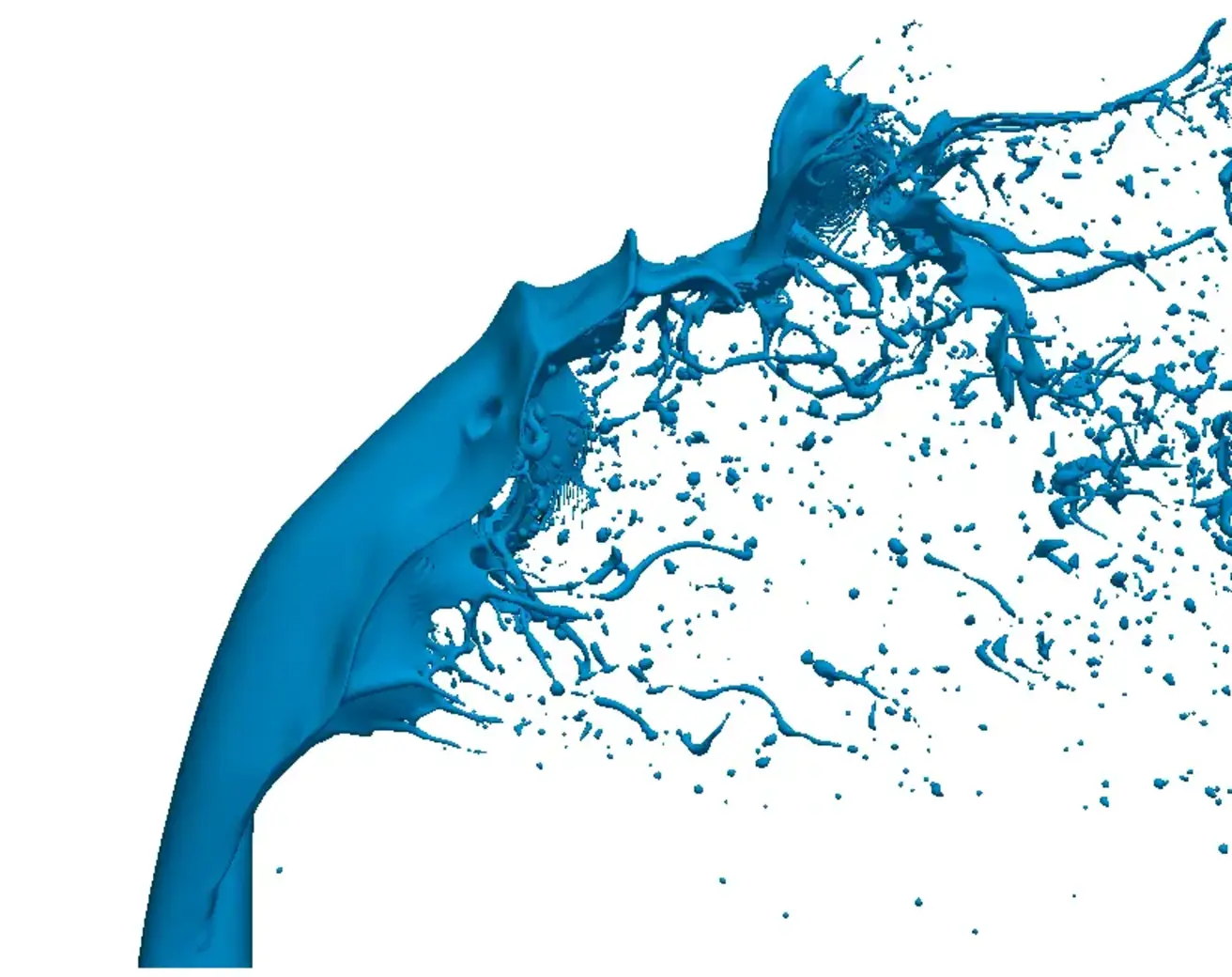
Three-dimensional computed liquid jet breaking into sheets, ligaments, and droplets.
Three-dimensional jet breakup used to test consistent mass and momentum transport at high density ratio.
05

Maintained research software · Researchers · graduate teams · industrial R&D

LEIA/LENT, DeboRheo, and TwoPhaseFlow

Problem
A numerical method is useful only when its implementation remains inspectable, testable, reusable, and connected to the paper and validation evidence.
Approach
Develop and maintain modular OpenFOAM software around interface tracking and viscoelastic two-phase flow, and extend shared multiphase components through a TwoPhaseFlow fork, backed by reference cases and continuous integration.
Evidence
Multiple peer-reviewed solvers and active repositories provide durable starting points for new methods, doctoral work, and industrial adaptation.
My role
Lead developer and scientific architect for LEIA/LENT and DeboRheo; maintainer and extension author in research performed with the TwoPhaseFlow fork.
Decision supported
Determine whether a new multiphase method can be built from verified, inspectable components instead of an isolated solver prototype.
Team receives
Research code, automated tests, reference cases, documentation, and method-specific training or transfer.
Current maturity
Maintained research software with peer-reviewed methods; production adaptation requires application-specific validation.
C++OpenFOAMVerificationContinuous integration

Software attribution: TwoPhaseFlow is a fork of the open-source framework originally developed by Henning Scheufler and Johan Roenby. Their authorship of the original framework and its core design is explicitly acknowledged here.

06

Research infrastructure · Research groups · collaborative projects

Reproducible research software, data, and agentic workflows

Problem
Hybrid models lose credibility when code versions, data provenance, parameters, and published results cannot be traced as one scientific record.
Approach
Combine version control, automated testing, continuous integration, persistent identifiers, metadata, RDM, and review with agent systems and LLM-assisted development—without delegating scientific acceptance to the model.
Evidence
Current workflows use agents to implement and audit numerical methods while explicit verification, validation, provenance, and reproducible computational evidence determine whether a result is accepted.
My role
Former lead of the NFDI4Ing research-software-development service and current architect of agent-assisted numerical-method workflows.
Decision supported
Decide whether a computational result has sufficient traceability, verification, validation, and human review to support reuse or action.
Team receives
Repository architecture, automated checks, metadata and provenance workflows, reproducible cases, and team training.
Current maturity
Established research-software and RDM practice; agent-assisted development remains governed by explicit scientific acceptance gates.
Agent systemsLLM-assisted developmentVerification & validationResearch data managementCI/CDProvenance

From evidence to engagement

Have a simulation you do not yet trust?

The consulting path explains technical diagnosis, feasibility work, delivery, validation evidence, documentation, and transfer.

Explore consulting →

Bring a difficult system

Let’s improve the system—with quantified uncertainty.

Start with a design brief using only the information you are comfortable sharing. If needed, we can put an NDA in place before substantive technical exchange.

Discuss a design problem